Ductless systems create nearly perfect conditions for mold, and because they recirculate your indoor air, what grows inside them ends up in your lungs. Here is the honest picture and what to do about it.
It is one of the questions I get asked most, usually with a slightly hopeful tone, as if the answer might be no. I understand why. Nobody wants to hear that the appliance keeping their bedroom comfortable might be growing mold a few feet from their pillow. But I would rather be straight with you than reassuring: yes, mold absolutely can and does grow inside mini splits, and in our humid climate it is common. The reason has nothing to do with a defective unit or poor housekeeping. It is simply how these systems work.
Why a mini split is a near-perfect home for mold
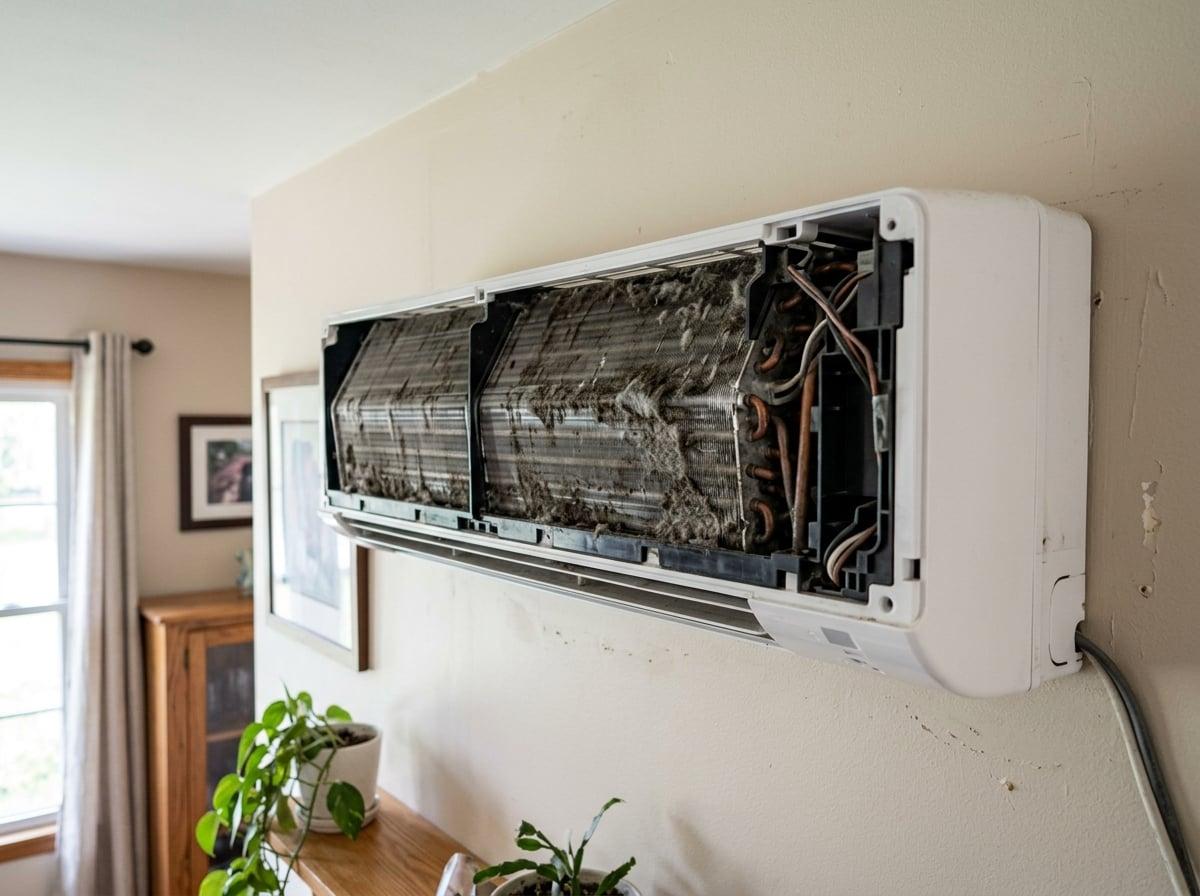
Mold needs three things to thrive: moisture, food, and a comfortable temperature. A mini split, entirely by design, supplies all three at once. Every time it cools, moisture condenses on the indoor coil, so the inside of the unit spends much of the summer damp. The food is the steady stream of dust, pollen, skin cells, and cooking residue that the fan pulls in from your rooms and deposits on those wet surfaces. And the temperature sits right in the range mold loves. Put those together in a dark, enclosed box and you have, unintentionally, built an ideal incubator.
This is why the problem shows up even in clean, well-kept homes. It is not a sign you did anything wrong. It is a byproduct of how ductless cooling handles humidity, and the Upstate gives it plenty of humidity to work with.
The part that actually matters: it reaches your air
Here is what makes this more than an appliance-maintenance issue. A central system pulls air through ductwork and past a large filter. A ductless mini split does something different: it recirculates the same room air over and over, blowing it directly across those damp internal surfaces and straight back into the room. There is no big filter in between doing meaningful capture. So when mold and its spores establish on the coil and blower wheel, the fan does not contain them. It distributes them, right into the space where you sleep, work, and breathe.
That is the difference between mold on a bathroom tile, which stays put, and mold in a mini split, which gets aerosolized every time the unit runs.
How to tell if your unit has it
You do not need a lab to catch most cases. The signs are fairly consistent:
- A musty, sour, or damp-basement smell when the unit first kicks on.
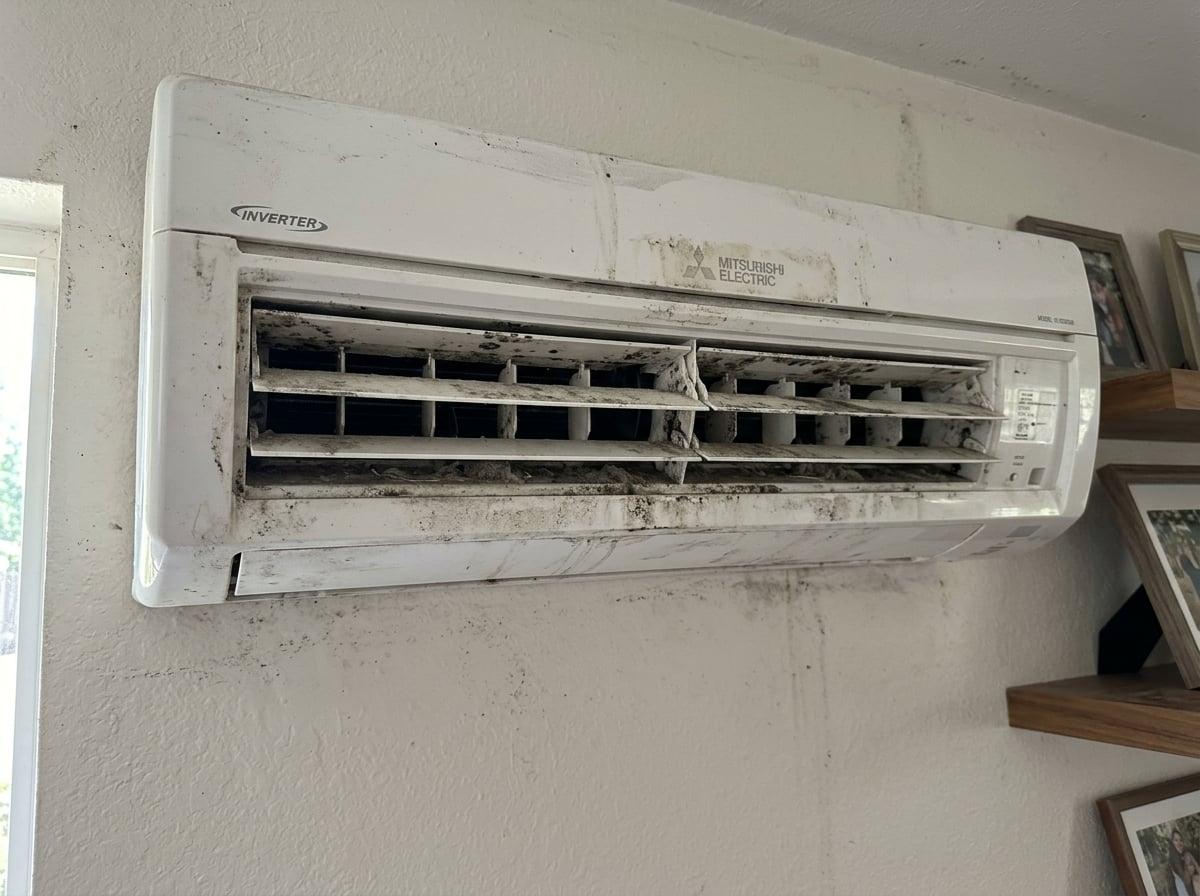
- Visible black, grey, or greenish speckling on the fan vanes or louvers if you shine a light inside.
- Allergy-type symptoms — congestion, itchy eyes, a scratchy throat — that ease when you leave the room or the unit is off.
- Symptoms that flare in the rooms with mini splits more than the rest of the house.
The smell is the most reliable early warning. That distinctive odor people describe as dirty socks is very often microbial growth warming up as air passes over it. If you can smell it, it is worth taking seriously rather than covering up with a plug-in air freshener.
Who should be most concerned
Everyone breathes better with a clean system, but some people feel the difference more sharply. Young children, older adults, and anyone with asthma, allergies, or a compromised immune system tend to react most to mold spores in the air. In households like those, a moldy mini split is not just an odor problem, it is a genuine indoor-air-quality concern that can quietly aggravate symptoms for months while everyone blames the pollen count.
What actually solves it — and what does not
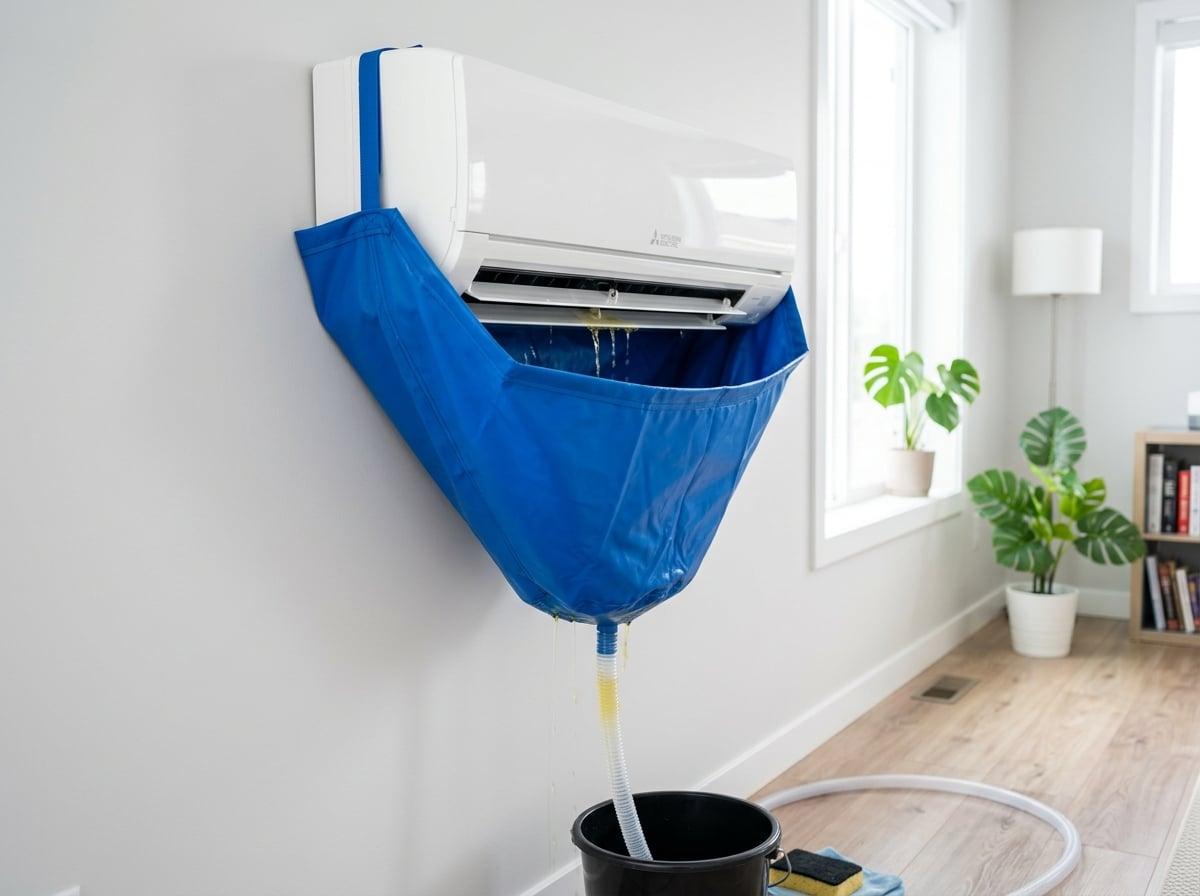
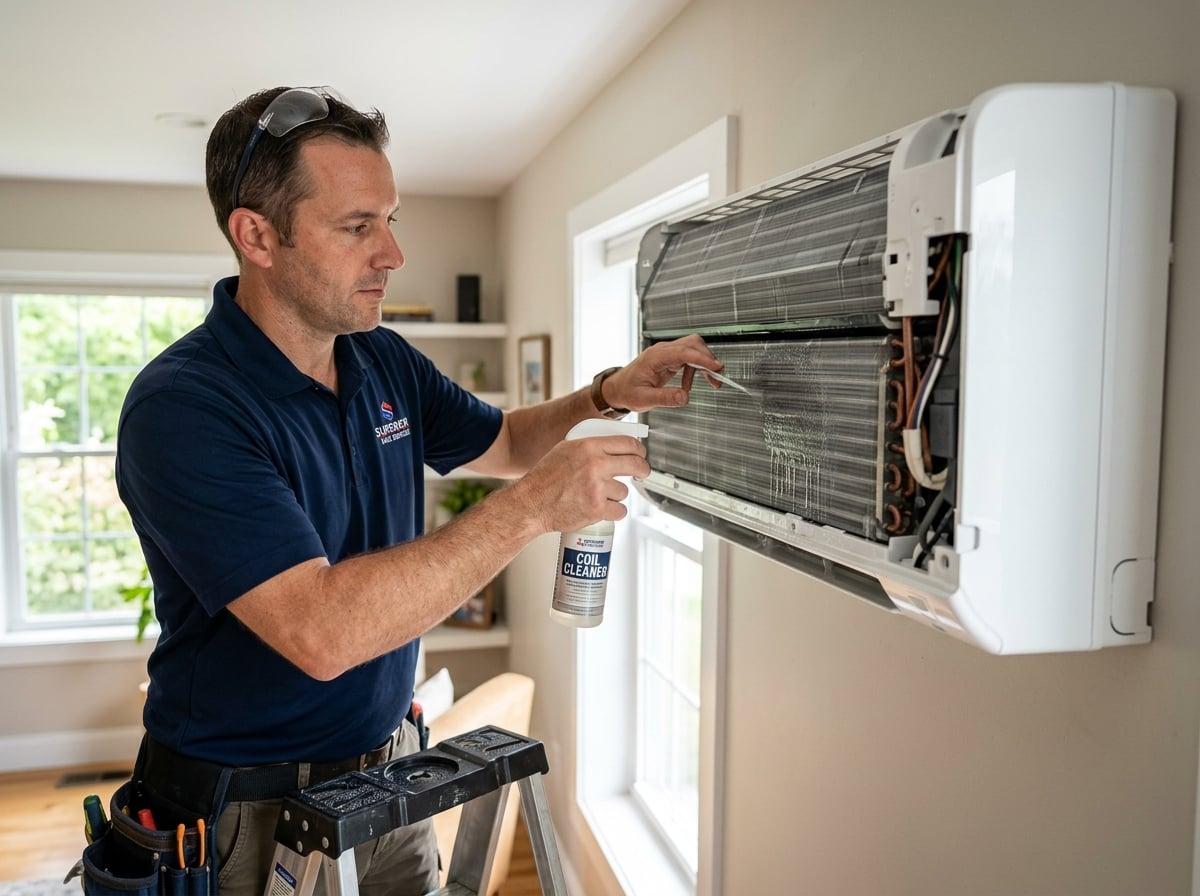
Two things make a real difference. The first is prevention: keep the filters clean, and after cooling, letting the unit run in fan-only mode for a few minutes helps dry the coil so it is less hospitable overnight. The second, once growth has taken hold, is a proper deep clean and sanitize. That means opening the unit, cleaning the coil and blower wheel where the mold actually lives, flushing the drain, and applying an anti-microbial treatment to kill what remains.
What does not work is the shortcut. Spraying an aerosol into the vents or wiping the visible louvers might mask the smell for a day, but it leaves the colony on the blower wheel untouched, and it comes right back. You cannot deodorize your way out of a mold problem. You have to physically remove the source.
You cannot smell your way to clean air with a spray can. If mold is growing inside the unit, the only real fix is to take the unit apart and remove it.
If your mini split has that telltale musty smell, or you have spotted growth inside it, it is worth addressing properly rather than living with it. Clean air is one of the quiet things you do not notice until it is gone, and a mini split that has been genuinely cleaned and sanitized gives it back.
Greenville Mini Split Cleaning Editorial Team
Service guides
Practical guides about ductless mini split cleaning, maintenance, and indoor air quality for Greenville-area homeowners.
Want this handled by a pro?
We clean and service ductless mini splits throughout Greenville and the Upstate.
Get a Free Quote