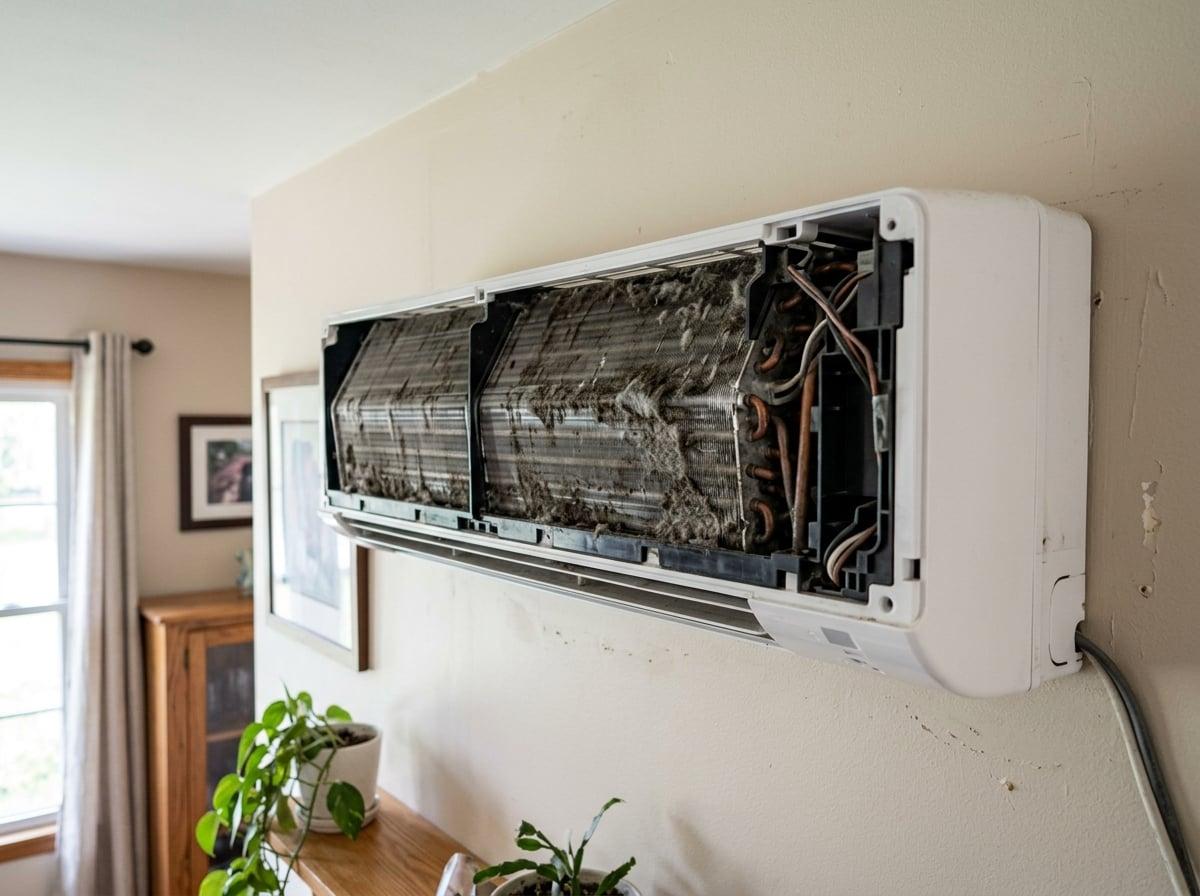
Water dripping from an indoor unit is one of the most common calls we get — and one of the most misunderstood. Here is what is really going on inside, and what you can safely check yourself.
You walk past your indoor unit and notice a damp patch on the wall beneath it, or worse, a steady drip onto the floor. It is alarming, and it is one of the calls we field most often, especially in the thick of a humid Upstate summer. The good news is that a leaking mini split is almost never a sign that the whole system is failing. In the large majority of cases it comes down to one thing: water that should be draining away is not. Let me explain why that happens and how to tell which version of the problem you have.
Where the water comes from in the first place
To understand the leak, it helps to understand where the water even comes from. When your mini split cools, the indoor coil gets cold, and moisture in the room air condenses on it exactly the way it beads up on a glass of iced tea. That is completely normal and by design. All that condensation is supposed to drip into a small pan and then run out of your house through the condensate drain line. When you see water indoors, it means that water made a wrong turn somewhere along the way.
The number one cause: a clogged drain line
If I had to bet on the cause of any given leak sight unseen, I would bet on the drain line, because that is what it is the vast majority of the time. That drain is a small tube, and it stays wet constantly during cooling season. Over months and years, algae and a slimy biofilm grow inside it until they narrow the passage and finally block it entirely. Once the line clogs, the condensate has nowhere to go. It backs up, overflows the pan, and finds its way out of the front of the unit and down your wall.
You can often confirm this yourself. Find where the drain line exits your home outside, usually a small white pipe near the outdoor unit, and watch it while the system runs. If water is trickling out steadily, your drain is clear. If it is bone dry while the unit is dripping indoors, you have found your clog.
A dirty coil that freezes and then floods
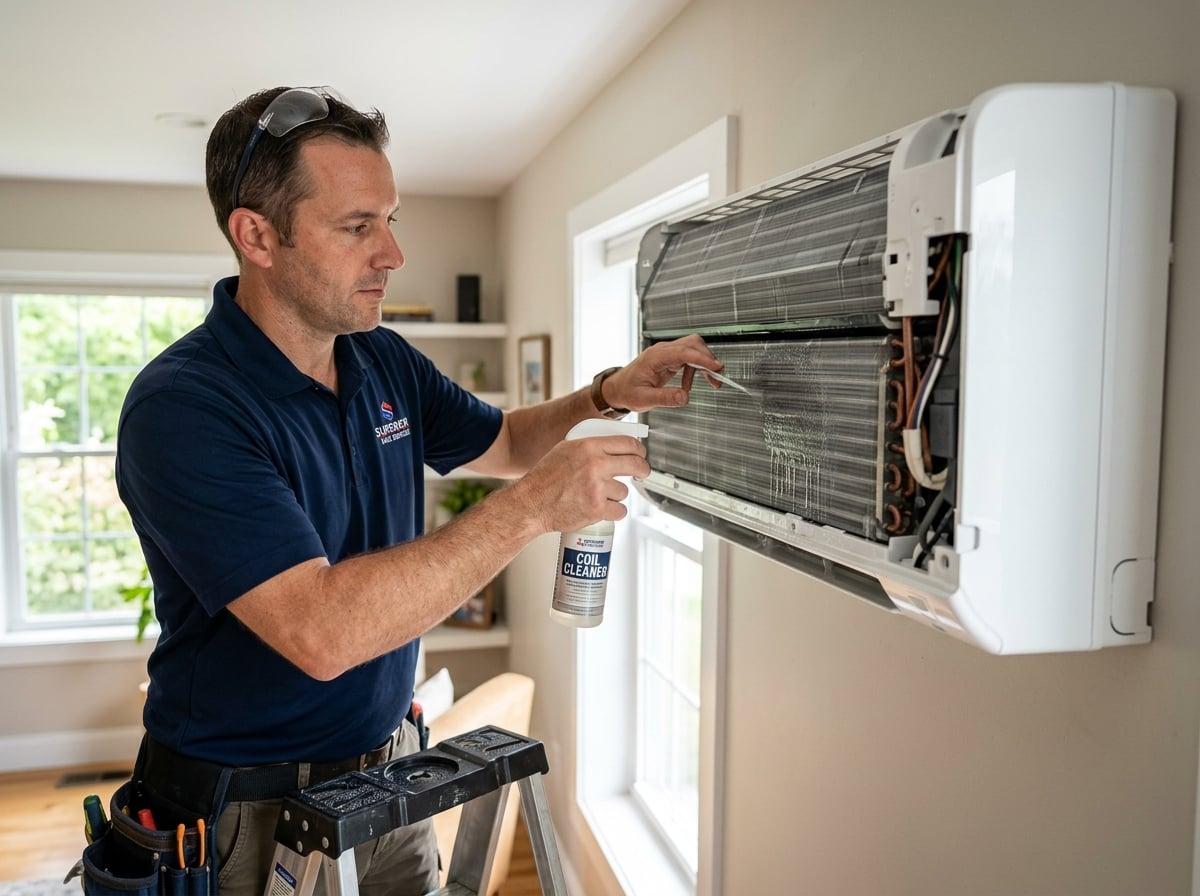
The second common culprit is closely tied to cleaning. When the coil and filters are caked with dust, airflow across the coil drops. Starved of warm room air moving over it, the coil can get too cold and actually ice over during operation. You may not even see the ice. But when the system cycles off, or you finally shut it down, all that frost melts at once, dumping far more water than the pan and drain were ever meant to handle. The result is a sudden gush that looks like a serious leak but is really a symptom of a dirty, airflow-starved system.
If your unit leaks in bursts rather than a steady drip, and the airflow has felt weak, this is very often the reason.
Installation and slope problems
Sometimes the leak was built in from day one. The indoor unit needs to sit dead level, and the drain line needs to run continuously downhill so gravity can do its job. I have opened up plenty of units that were mounted with a slight tilt in the wrong direction, or drain lines that dip and sag along the way, leaving a low spot where water pools and eventually backs up. These installs may run fine for a while, then start leaking as the smallest bit of buildup tips the balance. This one is not a DIY fix, but it is worth knowing about if a unit has leaked since it was new.
What you can safely check, and what to leave alone
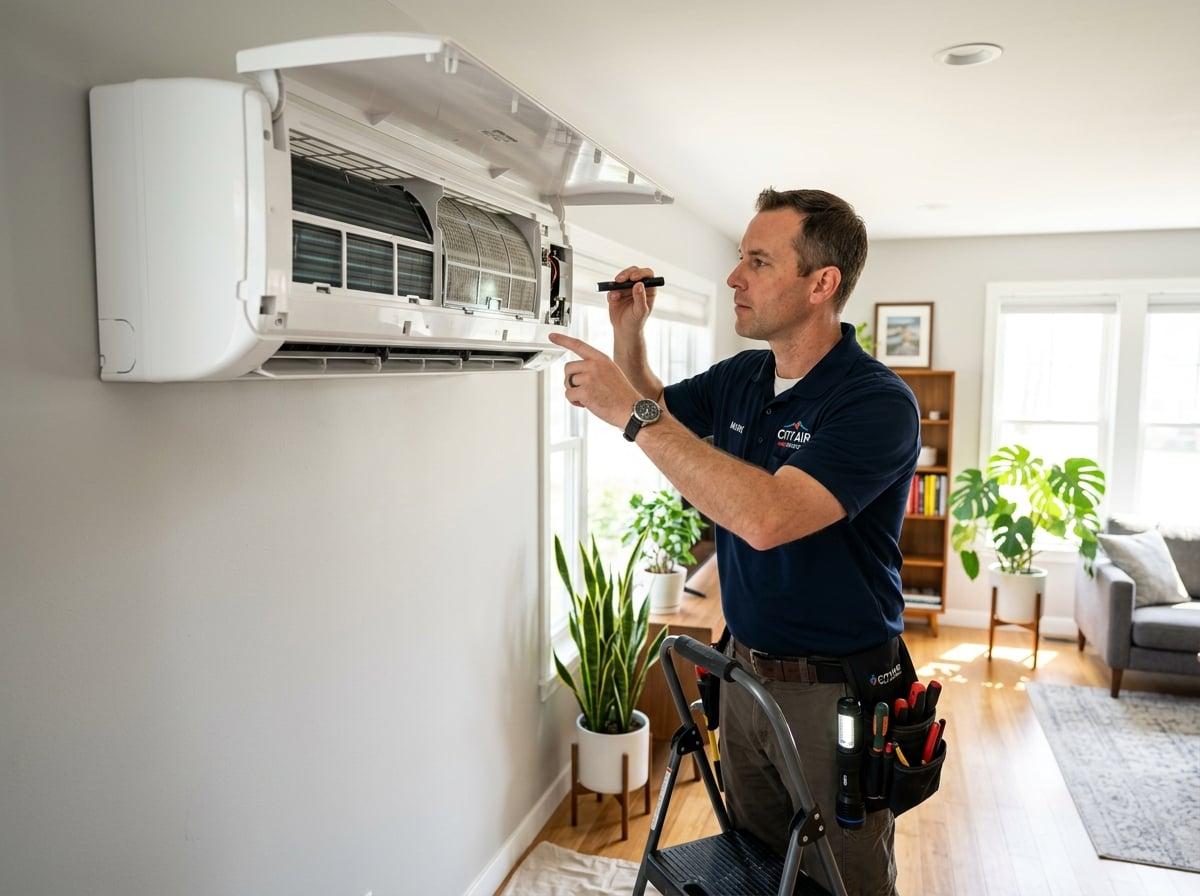
There are a few things a homeowner can reasonably do. Turn the unit off so it stops producing more water. Take the filters out and check whether they are filthy, since dirty filters feed the frozen-coil problem. Look outside to see whether the drain is flowing. Wipe up standing water so it does not damage your wall or floor.
- Switch the system off to stop new condensation forming.
- Remove and rinse the filters if they are dirty, then let them dry fully.
- Check the outdoor drain outlet for flow while the system runs.
- Mop up standing water promptly to protect flooring and drywall.
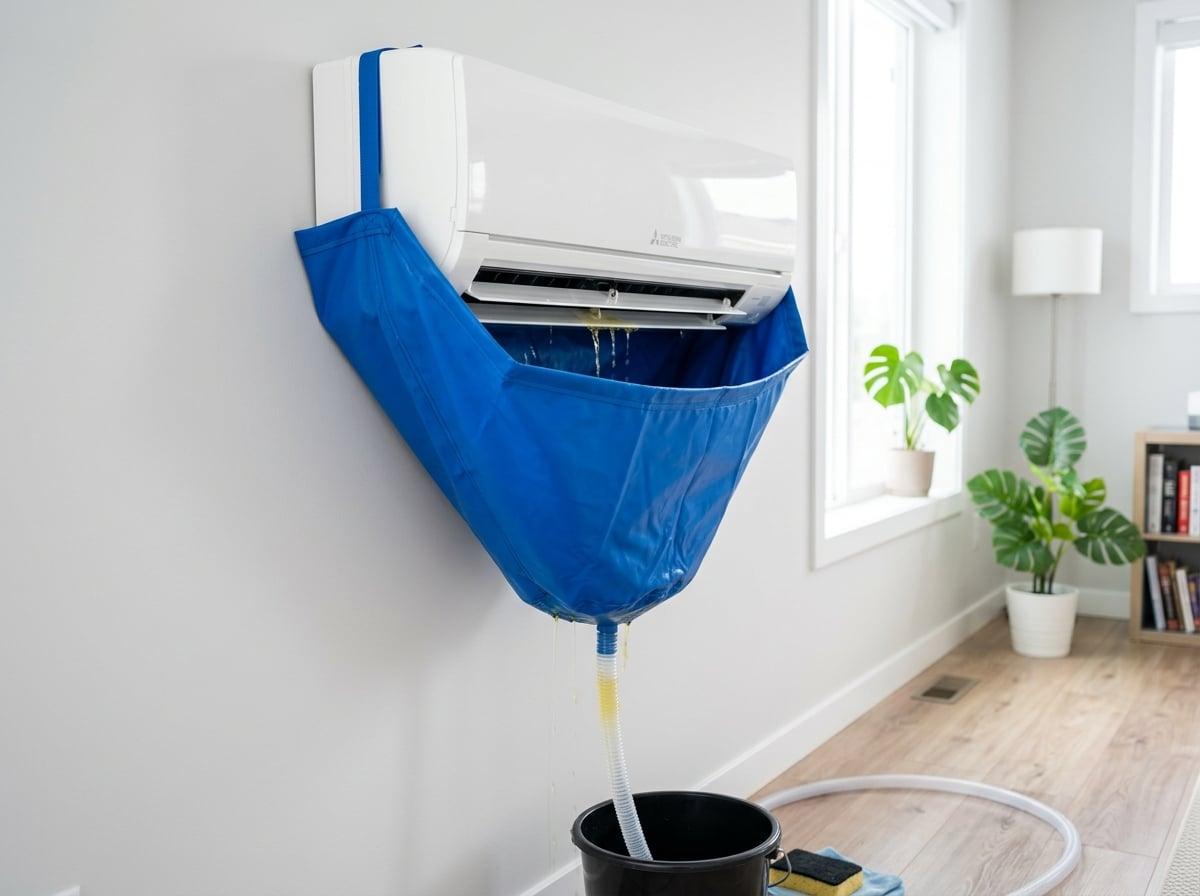
What I would not do is start poking wire down the drain line or dismantling the unit. The clog is often deep in the line or up in the pan, the blower wheel is easy to damage, and a shop vacuum on the wrong end can push debris further in. Clearing a drain properly and cleaning a frozen-up coil are quick jobs with the right tools and a containment setup, and they solve the leak at the source rather than treating the puddle.
A leaking mini split is usually not broken. It is blocked — and it is telling you the drainage side of the system needs attention.
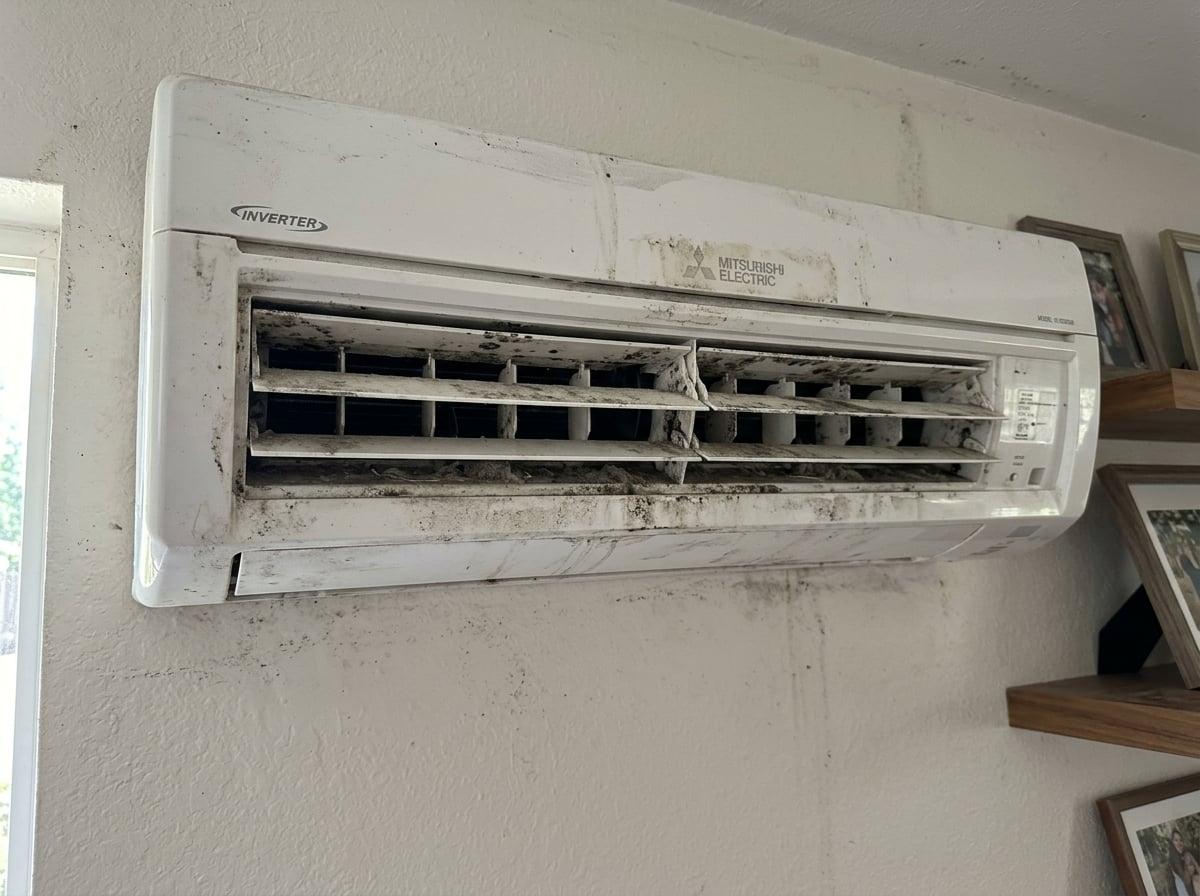
The reason leaks matter beyond the nuisance is water damage. A slow drip behind a wall unit can quietly stain drywall and feed mold long before you notice it. If your unit is leaking, it is worth sorting out sooner rather than later, both to protect your home and because a clogged drain and a dirty coil are exactly the conditions that lead to musty odors down the line.
Greenville Mini Split Cleaning Editorial Team
Service guides
Practical guides about ductless mini split cleaning, maintenance, and indoor air quality for Greenville-area homeowners.
Want this handled by a pro?
We clean and service ductless mini splits throughout Greenville and the Upstate.
Get a Free Quote